
If you see those small lines around your eyes every time you smile and you are searching for “crow’s feet remedies” hoping for something concrete, you are in the right place.
Crow’s feet are fine folds that start as dynamic lines (appearing when you express emotions) and, over time, settle and become static. They are not a “defect to be erased,” but a sign that the skin around the eyes — the thinnest on the face — is losing collagen and hydration.
In this article, I will show you how to get rid of crow’s feet (or rather, how to visibly and safely reduce them) starting from smart habits, moving through ultra-nourishing vegetable oils and high-concentration active ingredients, up to professional treatments that really work. You will discover how to reduce crow’s feet naturally, what to do under the eyes when the skin is sensitive, and what results to expect in 90 days.
No impossible promises: concrete, step-by-step advice, supported by dermatologists and clinical studies, with real examples and a practical plan that you can start today. Ready to transform your eye contour area with a proven method, without giving up your smile?
Crow’s feet are caused by a combination of three factors: repeated muscle movement (when we smile or squint), localized dehydration, and a decrease in collagen and elastin production due to age, stress, and lifestyle. The skin around the eyes is about four times thinner than on the cheeks: by dehydrating quickly, it highlights fine lines and micro-folds. Have you ever noticed how after a short night or a day in the sun without sunglasses, the wrinkles are more visible? It’s not a coincidence: dehydration, micro-inflammation, and facial expressions emphasize these side folds. This is why acting now is strategic: intervening early allows you to slow down the transition from dynamic lines to static wrinkles, with faster and longer-lasting results.
The good news is that there are different levels of intervention, all of them useful: daily prevention with concentrated, water-free active ingredients (vegetable oils, squalane, hyaluronic acid, botanical extracts), non-invasive home techniques (massage, compresses, sleep hygiene) and, when needed, medical treatments like fractional lasers or radiofrequency microneedling. You don’t need to do everything at once: a consistent strategy is enough. According to dermatological societies like the American Academy of Dermatology, the combination of nourishing/regenerating active ingredients remains the standard for reducing fine lines; integrating antioxidants and healthy habits amplifies the results. If you could choose a single action to start today, wouldn’t it be the one with the best effort-to-benefit ratio?
Prevention is the “invisible component” of visible results. For the eye contour, a simple rule applies: protect, hydrate, nourish. Apply sunscreen laterally up to the temples and wear wraparound sunglasses to reduce squinting. It is a small gesture that, over the course of a few months, makes a huge difference. Have you ever wondered why lines seem deeper in the summer? UV rays degrade collagen and cause dehydration: protection is an investment, not a luxury.
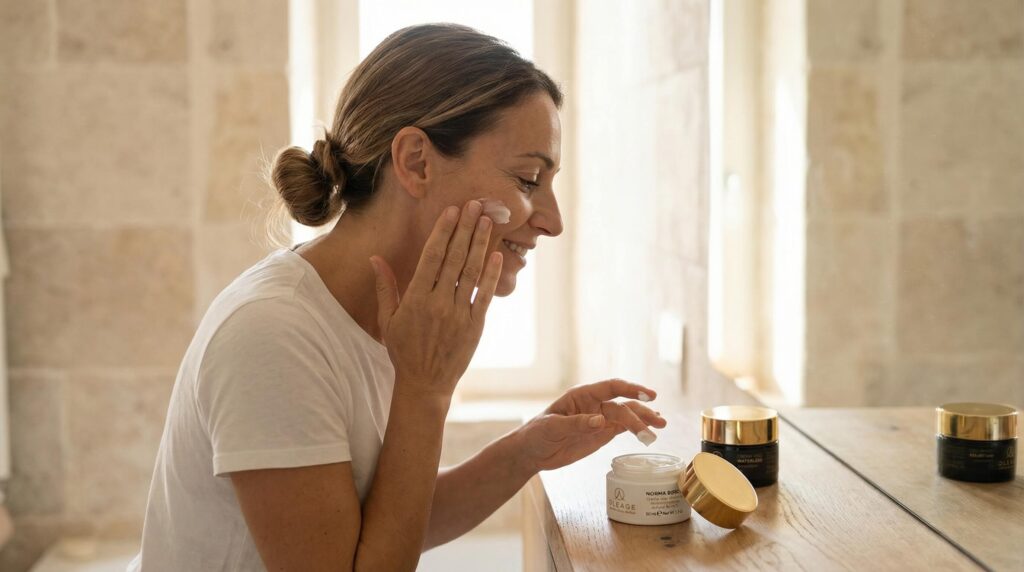
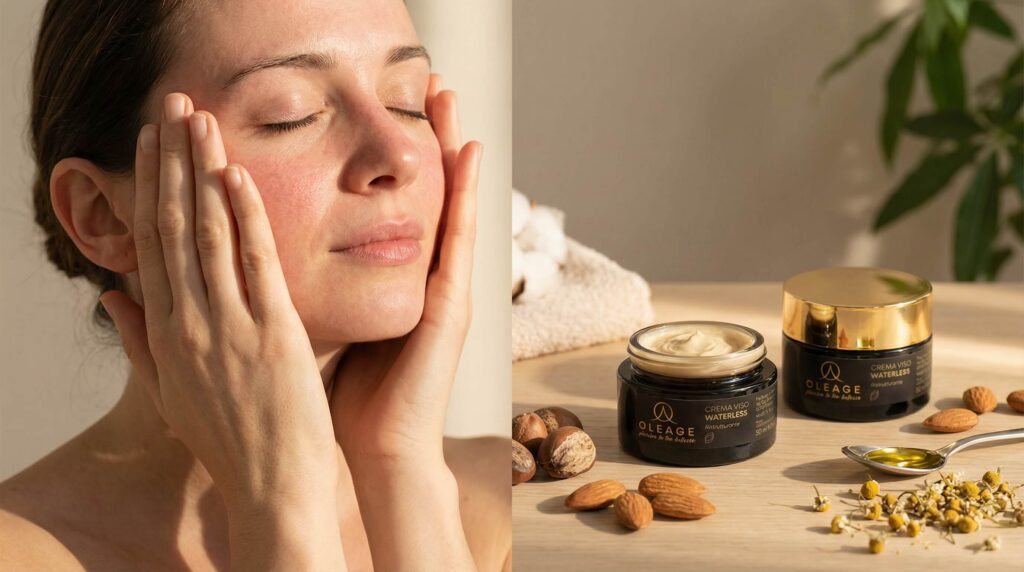
On the hydration front, choose an ultra-concentrated formula based on vegetable oils and butters, such as Grapeseed Oil, Shea Butter, and Almond Oil, with the addition of Hyaluronic Acid (ideally delivered in liposomes): they retain surface water, strengthen the skin barrier, and intensely nourish, making lines less evident. In the evening, an oil such as Argan Oil, Squalane, or Ginseng and Rosehip extracts helps stimulate the renewal and trophism of the facial skin; apply it with a light massage. Oils rich in Tocotrienols (Vitamin E) and Lecithin reduce oxidative stress and even out the skin texture. A few well-matched products rich in active ingredients are worth more than ten confusing bottles.
Quick practical checklist:
Remember: prevention doesn’t mean giving up on expressions, but modulating the factors that transform facial movements into persistent expression lines. Isn’t it much simpler to act on the 20% of habits that generate 80% of the results?
“Natural” solutions are not synonymous with miracles, but with gentle and consistent methods that improve hydration, microcirculation, and muscle tone without risks. When we talk about how to naturally soften crow’s feet, we are thinking of techniques that complement skincare, especially useful in the early stages. Do they really work? Yes, if applied regularly and combined with sun protection and targeted active ingredients.
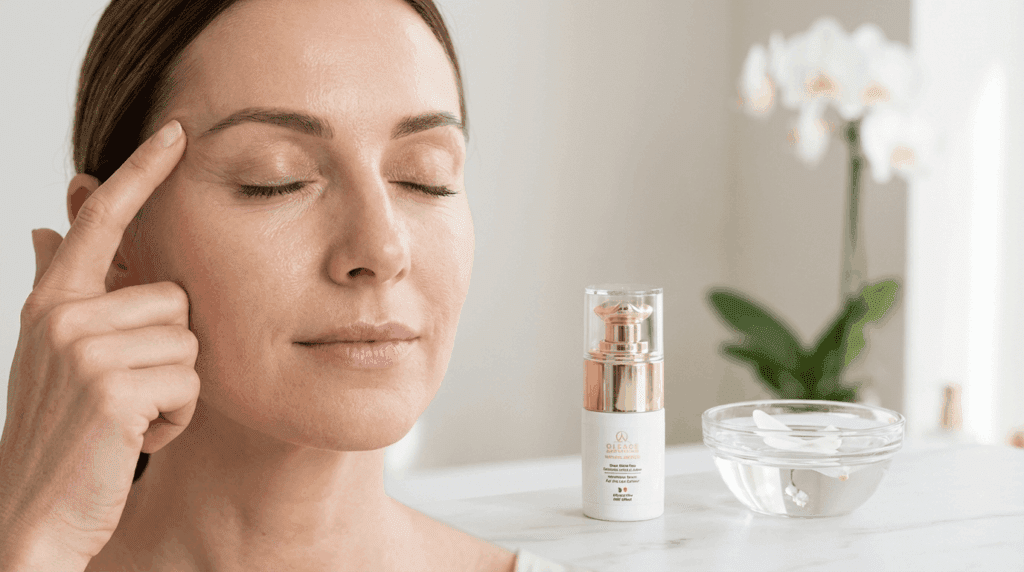
A well-executed periocular massage can reduce tension in the orbicularis muscle and improve lymphatic drainage, making the area smoother and more “relaxed.” Apply a drop of Grapeseed Oil or an ultra-fluid (water-free) serum, then:
Two minutes a day, for six weeks, are often enough to notice a subjective smoothing and an improvement in fine lines linked to tension and dehydration. Add warm compresses with green tea bags (well-squeezed) for 5 minutes: the polyphenols provide a light antioxidant action, useful before applying a balm or a rich cream. Facial gymnastics? Yes, but with common sense: avoid exercises that “squint” the eyes; instead, prioritize muscle relaxation and facial posture (tongue on the roof of the mouth, relaxed shoulders). Have you ever tried to monitor for a day how many times you squint in front of a screen? Proper filter glasses or increasing the contrast is enough to reduce micro-spasms that, over time, affect the area.
No cream can systematically compensate for a lack of sleep or internal dehydration. A sleep of 7–8 hours, with a slightly raised pillow, reduces stagnation and lateral compression folds (always sleeping on the same side “prints” lines over time). Hydration: 1.5–2 liters of water per day, plus hydrating foods (fruit, vegetables, broths). In the kitchen, think “antioxidants and good fats”: citrus fruits and kiwis (Vitamin C), red fruits (polyphenols), oily fish, and flaxseeds (Omega-3) to modulate inflammation. Such a diet doesn’t erase the imperfection, but it provides the building blocks for a more resilient dermis and improves the appearance of wrinkles.
The supplements chapter: hydrolyzed collagen ($2.5–5$ g/day for $8–12$ weeks) shows in various studies an improvement in skin elasticity and hydration; Vitamin C supports collagen synthesis, while zinc and copper are useful enzymatic cofactors. Do not expect a “magazine cover” before-and-after, but a $10–15\%$ perceived improvement in skin quality is realistic. Watch out for the sun: wraparound sunglasses and a wide-brimmed hat reduce squinting, one of the main causes of the appearance of crow’s feet.
If you could introduce just one single habit starting tomorrow, wouldn’t you choose the one that improves sleep and reduces stress, multiplying the effectiveness of your entire routine?
When we ask how to counteract crow’s feet with cosmetics, the answer lies in the combination of clinically proven active ingredients and a delivery system suitable for the periocular area. Liposomal Hyaluronic Acid (in micro-spheres) remains a fundamental element: delivered deeply, it stimulates hydration and turgor, softening lines in $8–12$ weeks. Start applying it consistently, morning and night; using it in formulations with a high concentration of oils reduces irritation and dryness. Vegetable oils rich in Tocopheryl Acetate and Vitamin E (such as Rice Bran Oil and Grapeseed Oil) protect against oxidative damage and work in synergy with sun protection.
Vegetable butters like Shea and oils containing Squalane offer complementary support: the former promotes cellular regeneration, while the latter helps restore the surface lipid film and improve elasticity. Ginseng and Aloe extracts improve the skin barrier, elasticity, and tone, while low-to-medium molecular weight Hyaluronic Acid “fills” surface fine lines by increasing hydration. It is worth looking for rich, water-free formulations for maximum active ingredient concentration, tested to minimize the risk of stinging and tearing. And exfoliants? It’s best to avoid strong acids on the outer corners of the eyes; instead, prioritize lipid-based formulations to deliver active ingredients deep into the skin.
Mini case study: Laura, 38 years old, combination skin and early crow’s feet. In the morning, she introduced a Serum rich in Squalane and Vitamin E, and in the evening, a Cream with Shea Butter and Argan Oil every other day. After 10 weeks, she reported less visible lines at rest and a greater “plumpness” in the area. An extraordinary result? No, but tangible and, above all, stable as long as she maintains the routine. Isn’t it liberating to know that consistency and a few targeted active ingredients, delivered effectively in concentrated formulations, are worth more than the “miracle cream” of the month?
You need a clear map to avoid getting lost among products and promises. Here is an essential path on how to limit crow’s feet under the eyes, adaptable to different levels of sensitivity.
Progress indicators: less visible lines at rest, makeup settling less into creases, and a perception of “plumper,” more radiant skin.
In the attempt to speed up results, it is easy to stumble into counterproductive practices.
First mistake: overdoing acids or scrubs in the periocular area. The skin thins out, and lines seem to worsen. It is better to focus on hydration and lipid-based formulations rich in well-dosed Grapeseed Oil.
Second: relying on “viral” remedies like toothpaste, baking soda, or pure essential oils on the eyes — you risk irritation and dermatitis.
Third: avoiding sunscreen because it “burns your eyes.”
Fourth: believing that “lifting” creams will erase wrinkles under the eyes in just a few days. The tightening effects are often optical and temporary; useful, but not a permanent solution.
A frequent myth concerns aggressive facial gymnastics: repeated contractions can worsen dynamic folds if not balanced by relaxation. Gentle techniques, massage, and postural awareness are a better choice.
Another myth: “Fillers and aesthetic medicine solve everything.”
Doesn’t it make more sense to choose a few safe, validated actions instead of chasing “tricks” that promise much and deliver little?
If you want to address crow’s feet with clarity and see results, think in terms of a system: protection, hydration, and targeted active ingredients. The key is not to find yet another “miracle cure,” but to build a sustainable path with maximum efficacy. Start with what matters most: a water-free eye contour formula with liposomal Hyaluronic Acid, and a concentrated cream/serum with Argan Oil and Shea Butter in the evening. Add Vitamin E and Squalane to seal the skin’s environment, and support it all with sleep, proper water intake, and a “pro-collagen” diet. Wear sunglasses for lateral protection when needed.
Don’t expect to “erase” time: our goal is to smooth, brighten, and preserve your expressiveness. Lines can tell a beautiful story; it’s up to you to decide how much of a leading role they should play.
All the products mentioned, formulated 100% Water-Free for maximum active ingredient concentration, are available in the Oleage lines—perfect for an eye contour that is hydrated, nourished, and visibly younger.
Q: How long will it take to see results from skincare on crow’s feet?
A: With SPF, concentrated active ingredients (such as liposomal Hyaluronic Acid and Shea Butter), and a well-tolerated water-free formula, visible improvements typically appear between 6 and 12 weeks. Hydration provides an immediate “plump” effect, but improving skin quality requires consistency. Take photos in the same light every 4 weeks to monitor your progress.
Q: Can I use concentrated active ingredients (e.g., Hyaluronic Acid, Squalane) on the eye contour if I have sensitive skin?
A: Yes, oil-based formulations or butters (such as those with Almond Oil and Shea Butter) tend to be very well tolerated, even by sensitive skin. Start every other day and always apply a minimal amount.
Q: Are there truly useful natural remedies?
A: Yes: a gentle daily massage, warm compresses (green tea), regular sleep, proper water intake, and a diet rich in Vitamin C and Omega-3. Plus, concentrated water-free active ingredients.
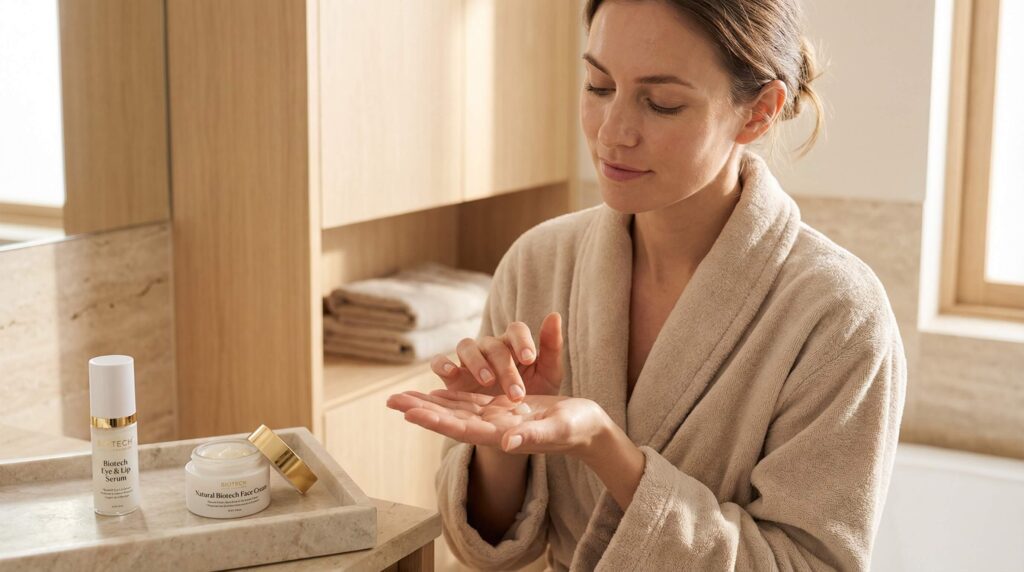

In a cosmetic products market increasingly attentive to quality and sustainability, Oleage aims to stand out with its innovative range of waterless cosmetic products, featuring a line designed to meet the needs of contemporary consumers. Our Oleage Classic and Oleage

Subscribe to our newsletter, enter your email:
Via F. Gregorovius 52, Perugia (PG)
VAT 03875550547
Subscribe to the newsletter to get a 15% discount on your next order