When discussing skincare, terms such as nutrition and hydration are often used almost interchangeably… but these two functions actually respond to very different needs.
Understanding the difference between moisturising and nourishing the skin is essential for choosing the most suitable treatment, especially based on your skin type, as in the case of oily skin, which has different needs than dry skin.
While moisturising means supplying and retaining water – often through active ingredients such as hyaluronic acid, typically found in moisturisers – nourishing the skin means supplying lipids and similar substances that strengthen the skin barrier with a more nourishing action. To really understand how these two approaches work and make an informed choice, keep reading the article!
In short, when considering whether to moisturise or nourish, the difference lies in the function performed: moisturising aims to preserve and retain water in the skin, while nourishing acts to restore essential lipids. The need for hydration arises when the skin struggles to retain water, compromising the hydrolipidic film, while nourishing the skin means strengthening the skin barrier through similar substances that support its protective function.
Ingredients such as hyaluronic acid are often used to restore the skin’s moisture balance, especially when it appears dehydrated but not necessarily dry, a condition that is also common in combination or oily skin.
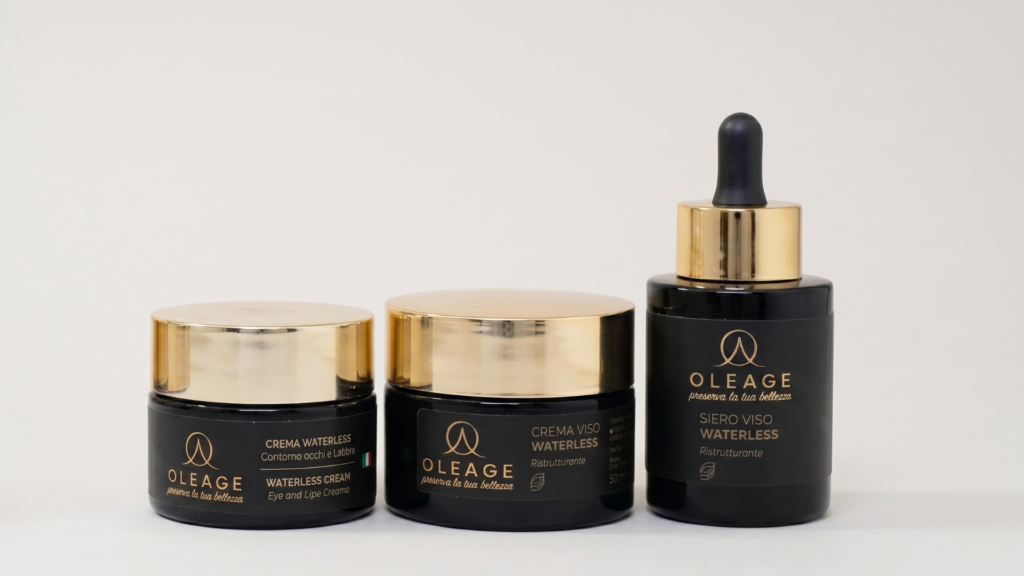
Often, the skin needs both functions, but in different proportions depending on skin type and external conditions. Thanks to Oleage’s waterless lines, you can choose the most suitable treatment between hydration and nutrition for a waterless and highly personalised skincare routine.
Dehydration is one of the most common skin problems and manifests itself as dryness, a feeling of ‘tight skin’ and loss of elasticity. This occurs when the skin barrier is unable to counteract water loss, partly due to environmental factors such as wind, cold or the use of aggressive cleansers.
In these cases, moisturising the skin is essential: moisturising means restoring the water balance, helping the skin to function properly and remain supple.
Even if your skin is not very dry but dehydrated, there may be a clear need for treatments that help the skin retain water. Dry skin needs constant support to prevent dehydration and restore comfort and softness over time.
When skin is undernourished, it tends to lose vitality and radiance, appearing dull, fragile and more prone to signs of premature ageing.
This occurs because dry skin lacks lipids, which are essential for maintaining the integrity of the skin barrier and defending the skin against external agents. In these cases, your skin needs not only water, but above all the restoration of the lipid substances that make it resistant and comfortable.
It is important to remember that the skin is an organ in its own right and, as such, has specific needs that vary over time: skin that needs nourishment must be supported with a targeted approach that takes into account the correct balance between hydration and nourishment. Even those who think they have oily skin can experience a lack of lipids, with skin that appears shiny but is actually fragile and reactive.
In these situations, a nourishing cream helps restore comfort and protection, while ingredients such as hyaluronic acid can complement the nourishing action by supporting the overall balance of the skin. Only in this way is it possible to guide the skin towards a healthy, stronger, more elastic and radiant condition over time.
When it comes to moisturising or nourishing the skin, it is essential to distinguish between two different needs, which can arise at different times and on all skin types. Understanding which need is predominant helps you choose the most suitable treatment and build a truly effective routine.
In these cases, the skin appears dull, loses elasticity and struggles to retain moisture. This is a sign that dry skin needs hydration or that oily, dehydrated skin needs help to restore its balance.
Oleage’s Biotech Natural Waterless Line is designed precisely for this type of need. The moisturising formulations help to maintain the water level in the skin tissues and strengthen the skin barrier, promoting the formation of a protective film that limits moisture loss.
This approach is ideal when the skin needs to be moisturised, appears stressed by the climate or environmental changes and needs to regain comfort and freshness.
In other cases, the problem is not water but a lack of lipids. Undernourished skin appears fragile, less elastic and more exposed to external agents. Even normal or mature skin can go through phases where it needs richer support to maintain healthy, smooth skin.
The Oleage Classic Waterless Line is recommended if your skin needs deep nourishment. Formulas based on natural oils and concentrated active ingredients work to replenish lipid reserves and strengthen the skin barrier. This type of treatment is particularly suitable for mature skin that is stressed or exposed to harsh environmental conditions, helping the skin to regain elasticity and resilience over time.
Understanding the difference between hydration and nourishment is the first step towards conscious skincare. Skin types must be observed over time, because needs change: if the skin loses water, elasticity or comfort, it is essential to take targeted action to prevent water loss and support the skin’s balance.
Not all skin types need the same things at the same time: some skin needs nourishment, others need hydration above all else, and often a well-balanced moisturising and nourishing approach is required. Recognising these signs allows you to maintain soft skin that is more resistant to external stressors and visibly more even.
A waterless approach allows you to work in an essential and targeted way, respecting the physiology of the skin and helping it to achieve its natural balance. When skincare truly responds to the needs of the skin, treatments do not weigh it down, but leave it velvety, comfortable and sustained over time.
Taking care of your skin means listening to it, understanding it and consciously choosing how to care for it every day.
Meglio crema idratante o nutriente? Qual è la differenza e cosa scegliere per la tua pelle Se ti stai chiedendo se è meglio una crema idratante o nutriente, probabilmente la tua pelle ti sta mandando segnali poco piacevoli: tira, si

Subscribe to our newsletter, enter your email:
Via F. Gregorovius 52, Perugia (PG)
VAT 03875550547
Subscribe to the newsletter to get a 15% discount on your next order